


Rebuilding After the Flood: Letaba and Selati River Bridges
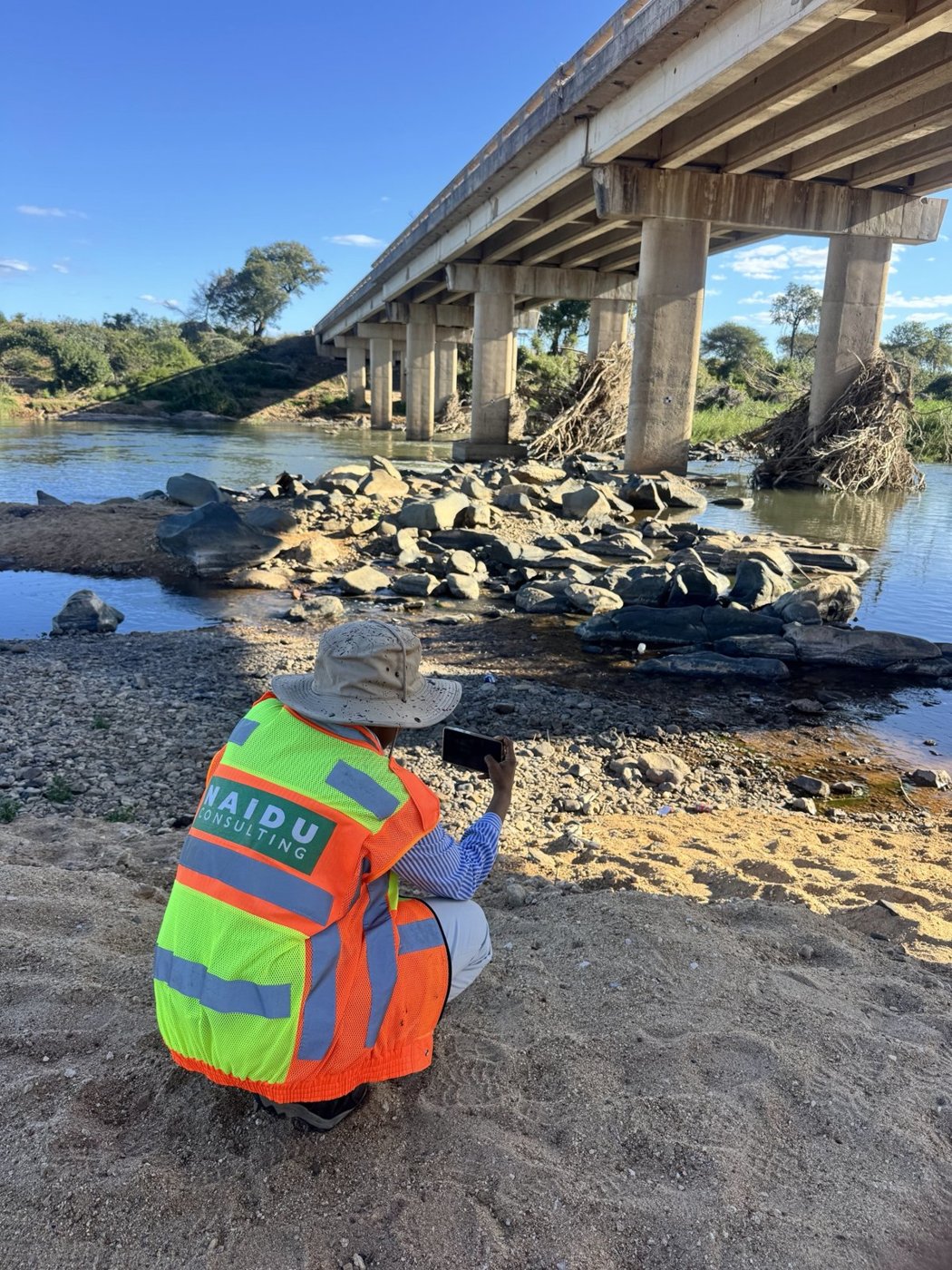
Letaba: a Naidu Consulting engineer photographing the bridge from the riverbed.
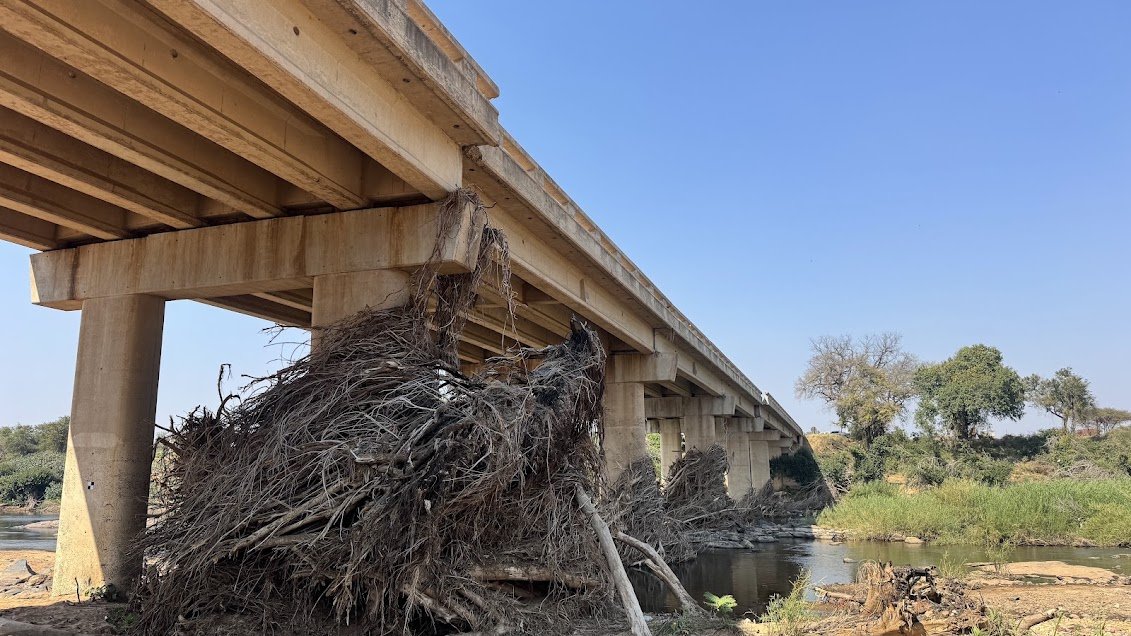
Letaba: uprooted trees still lodged against the piers, months after the flood.

Selati: aerial view on 27 January 2026, shortly after the flood, showing the scoured approach
‘When the river rises above the deck, a bridge stops being a bridge and becomes a dam.’
In January 2026, two bridges in Limpopo experienced the full force of severe flooding.
Following weeks of heavy rainfall, river levels rose dramatically across the province. Flood warnings escalated to Level 10 (Red), and on 17 January 2026, the government declared a national state of disaster. Road links were severed, isolating communities and closing critical crossings.
Two structures on the national road network were severely affected: the Letaba River Bridge on the R578 and the Selati River Bridge on the R40, both within the Ba-Phalaborwa Local Municipality.
Naidu Consulting (Pty) Ltd was appointed by the South African National Roads Agency SOC Ltd (SANRAL) to undertake the design and supervision of the emergency repairs to these bridges as part of a wider programme addressing flood-damaged structures on the R578, R524, R40 and R36.
This article explores the flood damage, ongoing engineering interventions and measures to restore these vital transport links.
Understanding the damage
Bridges are designed to allow floodwater to pass beneath them. When water overtops the deck, however, the loading conditions change significantly.
Three principal effects act on the submerged superstructure:
- Hydrodynamic drag: Fast-moving water exerts lateral forces on the deck, parapets and edge beams. These forces increase with the square of the flow velocity.
- Debris loading: Trees, sediment and other debris accumulate against the upstream face, increasing the area exposed to the flow and the resulting forces.
- Uplift and buoyancy: Water flowing over and around the deck, together with air trapped between precast beams, can reduce the effective weight of the superstructure while lateral forces continue to act on it.
A simply supported deck resting on elastomeric bearings relies on gravity and friction to maintain its horizontal position. When uplift and buoyancy reduce the effective weight while lateral forces increase, the deck may be displaced laterally.
The damage sustained at the Letaba and Selati River Bridges illustrates how these forces can affect different elements of a bridge, from the superstructure and bearings to the supporting embankments and road approaches.
Letaba River Bridge (IDB5825, R578 Section 3, km 10.83)
The Letaba River overtopped the bridge deck by approximately 1.6 m. The three central spans (Spans 4, 5 and 6) were displaced laterally in the direction of flow by approximately 400 mm to 600 mm, moving from their original positions on the elastomeric bearings. No notable longitudinal movement was recorded.
The flood also scoured the embankment at Abutment 2, damaged the expansion joints and parapets, and deposited substantial debris against the piers.
These observations demonstrate the severity of the forces acting on the bridge and the need to restore the displaced spans, repair damaged components and improve the structure’s resistance to future flood loading.
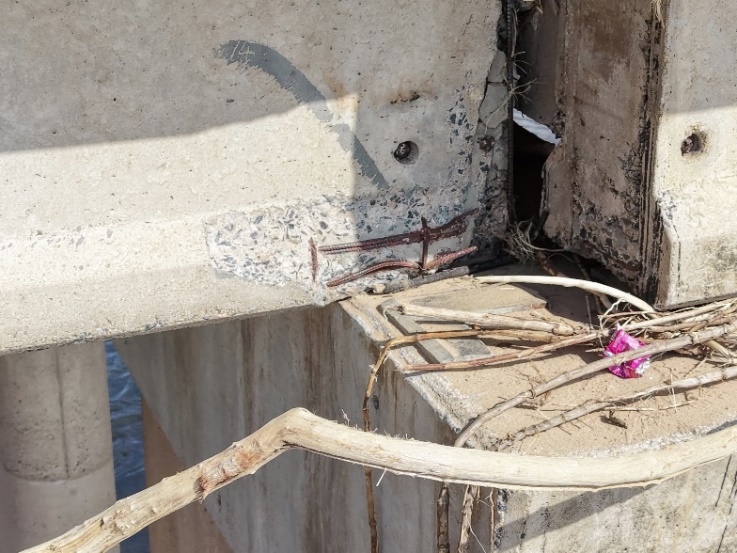
Letaba: concrete spalled at a beam end by the sliding movement, with flood debris still caught at the joint.
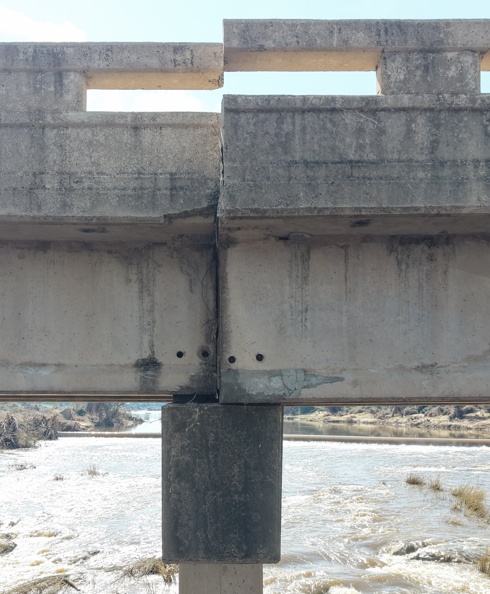
Letaba: the displaced Span 6 edge beam, stepped out of line with the adjacent Span 7 beam still seating on its bearing.
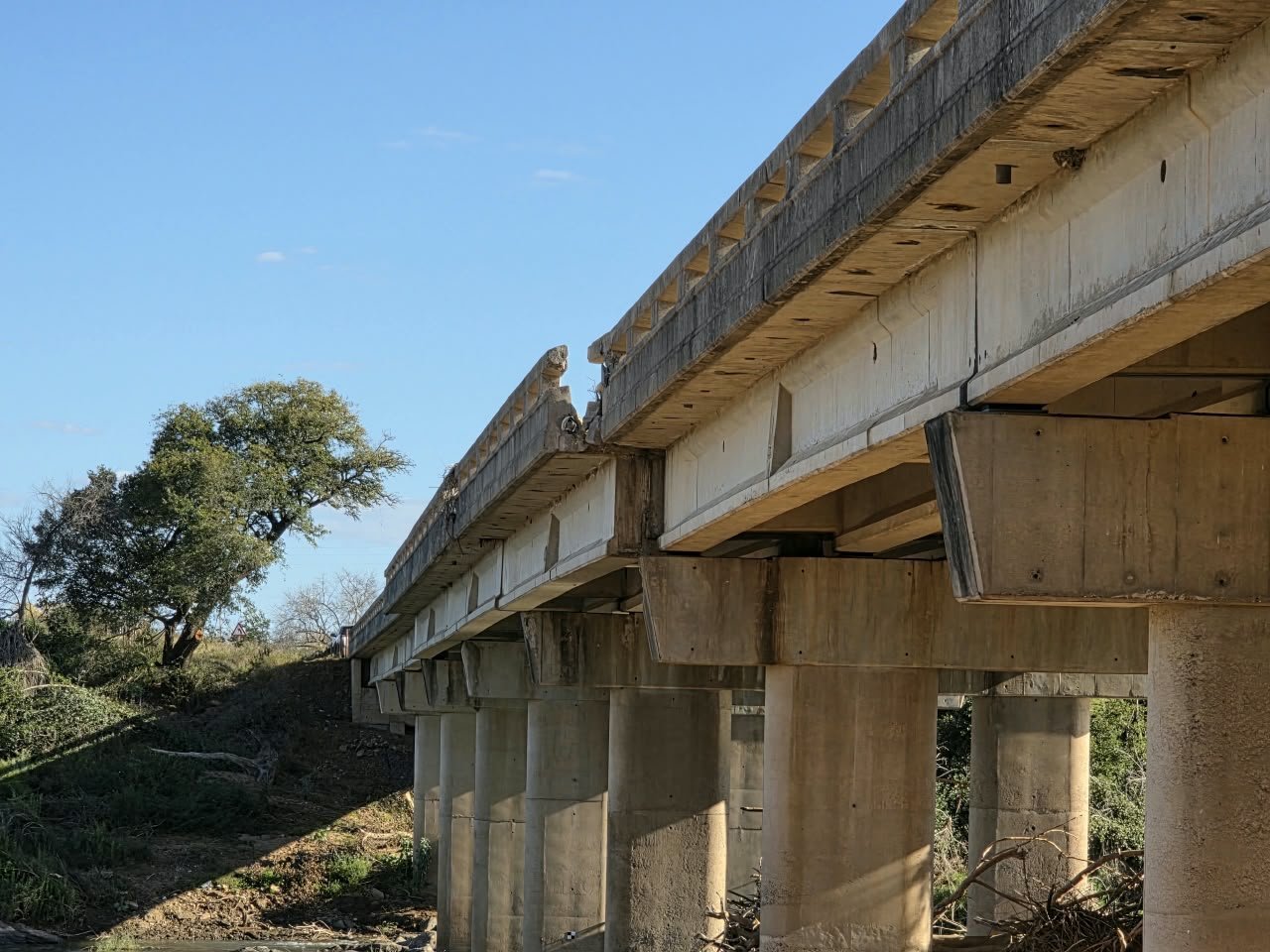
Letaba: the step in the deck edge and parapet line marks the lateral shift of the central spans.
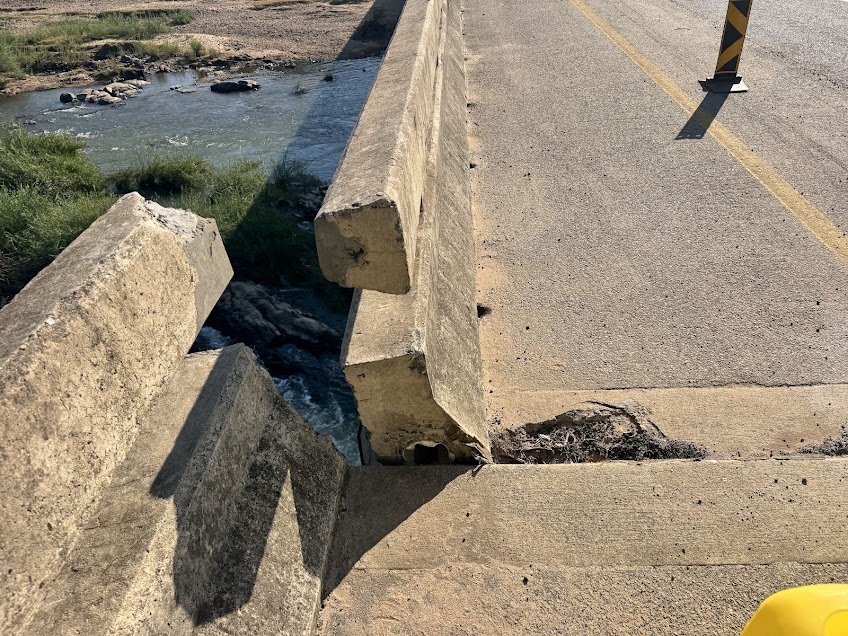
Letaba: parapet ends pushed out of line across the expansion joint.
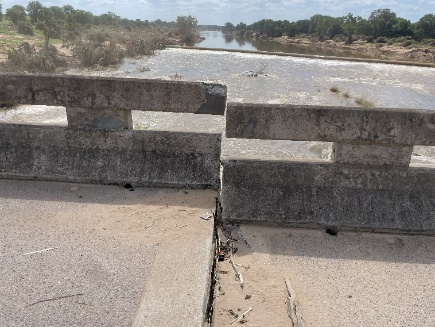
Letaba: parapets misaligned across a joint, showing vertical as well as lateral displacement.
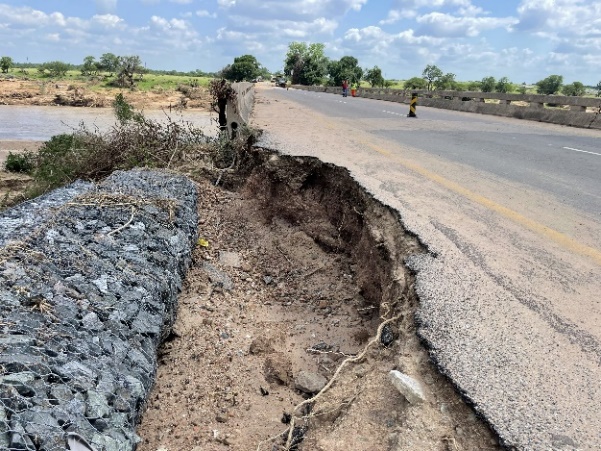
Letaba, Abutment 2: embankment fill scoured out, undermining the road edge.
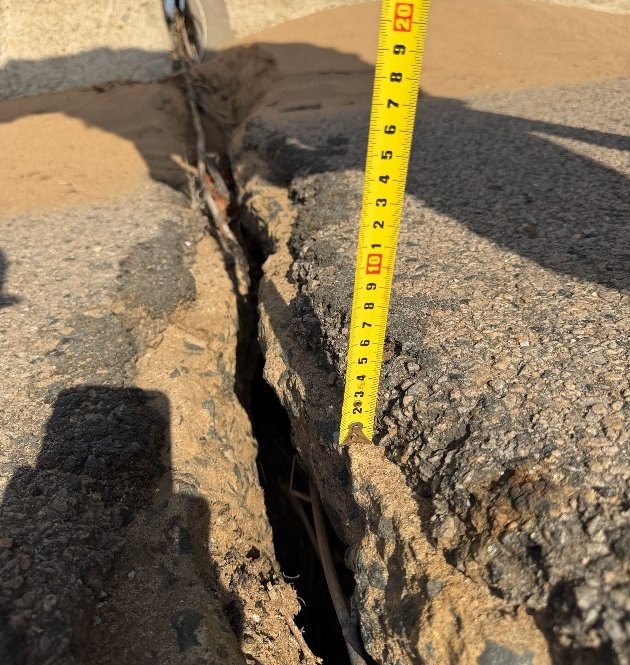
Letaba: a damaged asphaltic plug joint, scheduled for replacement.
Restoring the bridge deck
The central spans are being returned to their original alignment through a controlled hydraulic jacking operation which involves the following steps:
- Establishing safe working conditions: Due to the lateral displacement resulting in the partial overhang of the edge beam, traffic has been restricted to a single 3.5 m lane, with only one 30-tonne vehicle permitted on the displaced spans at a time. A suspended access platform and jacking brackets provide access without requiring conventional temporary works founded in the river.
- Lifting the spans: Synchronised hydraulic jacks raise each span by approximately 75 mm to 110 mm, allowing the damaged bearings to be removed.
- Realigning the deck: Horizontal jacks move the spans laterally by approximately 400 mm to 600 mm on low-friction pads. Movement is controlled in measured increments and checked against survey control.
- Installing new bearings: New elastomeric bearings are installed before the spans are lowered into their restored positions.
- Introducing positive restraint: New restraint blocks are constructed between the beams and edge beams to provide a positive load-resisting mechanism against future lateral movement.
Additional work includes replacing the asphaltic plug joints, repairing and protective coating of the parapets, crack sealing, concrete spall repairs on the beams and pier capping beams, removal of accumulated debris and reconstruction of the scoured embankments. Gabion mattresses and boxes provide embankment protection, while the deck and approach pavement are reinstated, thereby restoring full access.
Selati River Bridge (B2368, R40 Section 7, km 30.72)
The Selati River Bridge is a five-span structure of precast beams with an in-situ concrete deck slab, founded on large caissons.
The river overtopped the deck by approximately 0.6 m. Unlike Letaba, the deck remained in position. However, significant damage occurred at the approaches and beneath the deck.
Floodwater scoured the road behind both abutments, washing away substantial sections of the approaches. Sections of the steel handrail were also damaged.
Inspection beneath the deck revealed further structural concerns. The concrete bearing shelves beneath the beam ends had spalled back to the reinforcement, leaving some bearings close to a damaged concrete edge.
These defects required attention to both the bearing support conditions and the integrity of the road approaches.
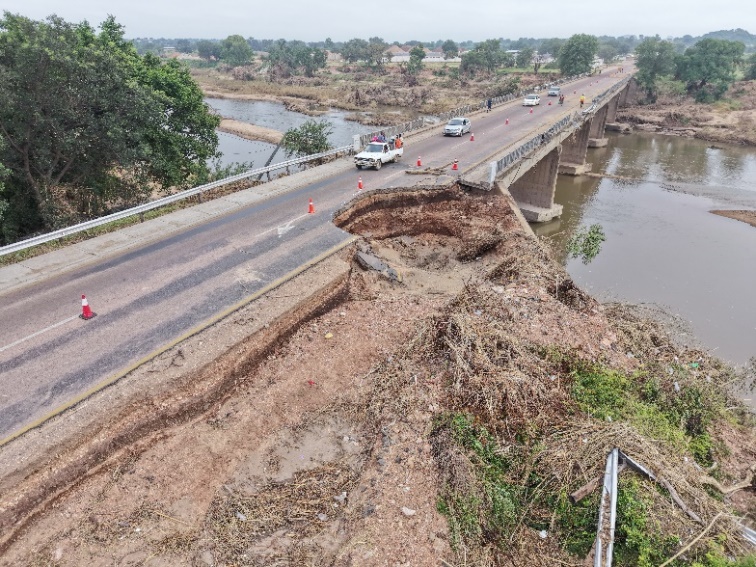
Selati: a section of the approach road washed away behind the abutment.
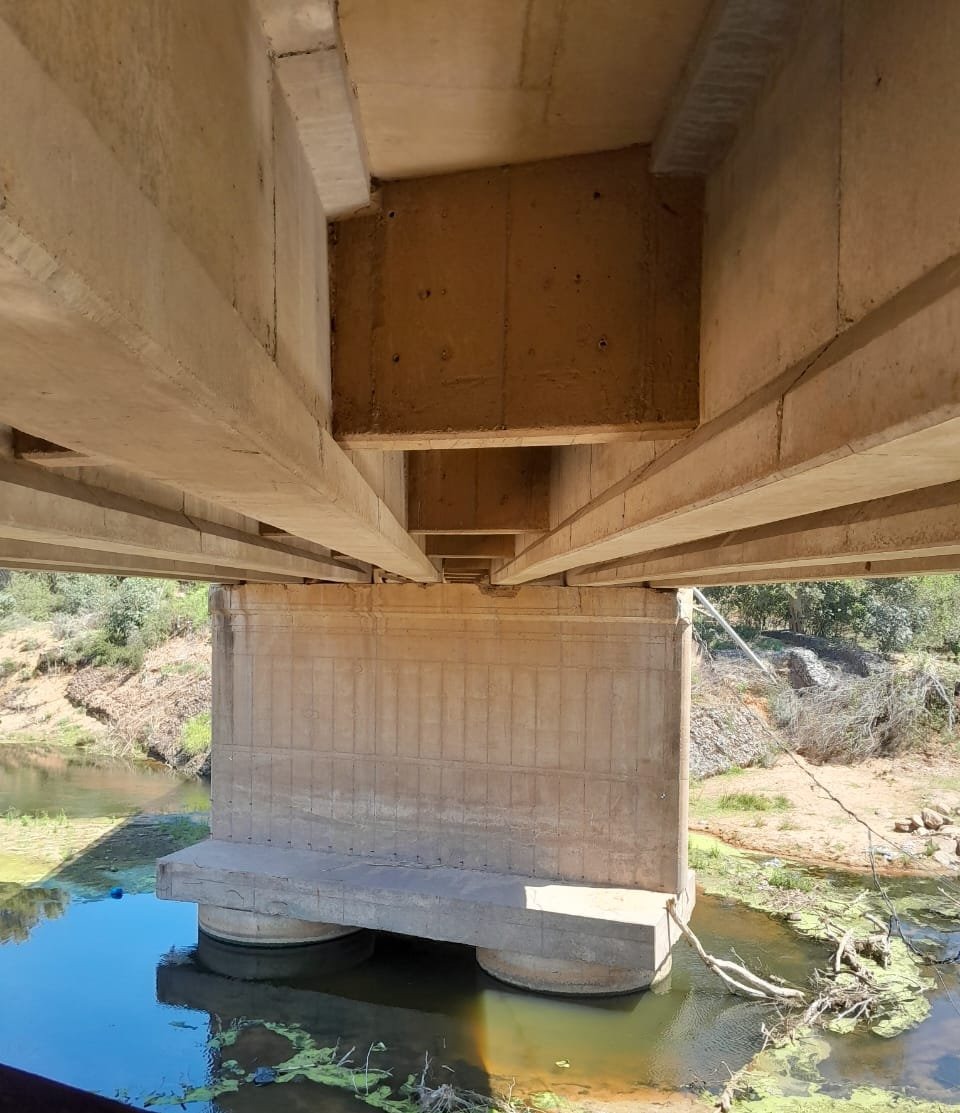
Selati: a pier on twin caissons, viewed from the UBIU platform.
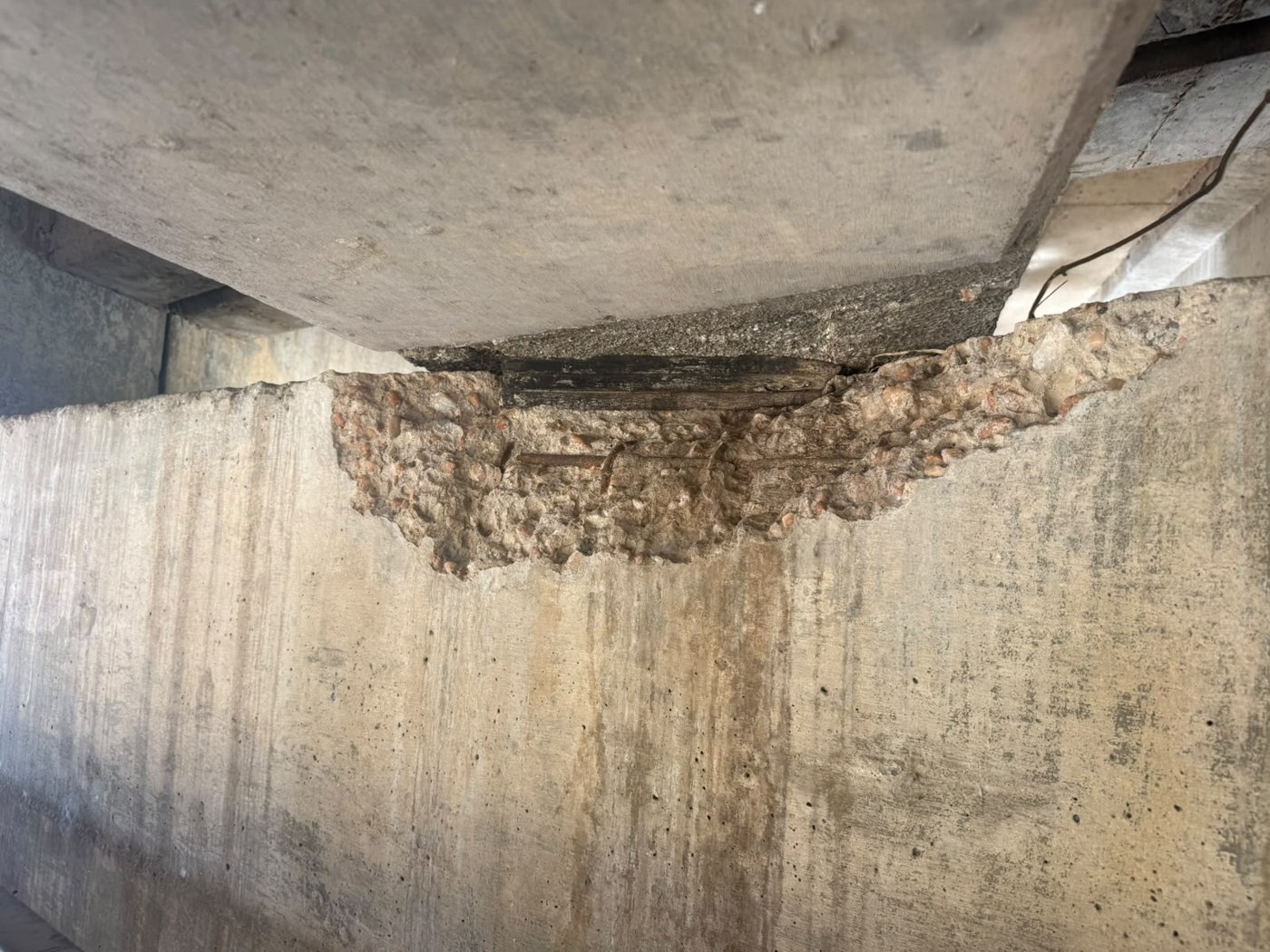
Selati: a spalled bearing shelf, with reinforcement exposed beside the bearing.
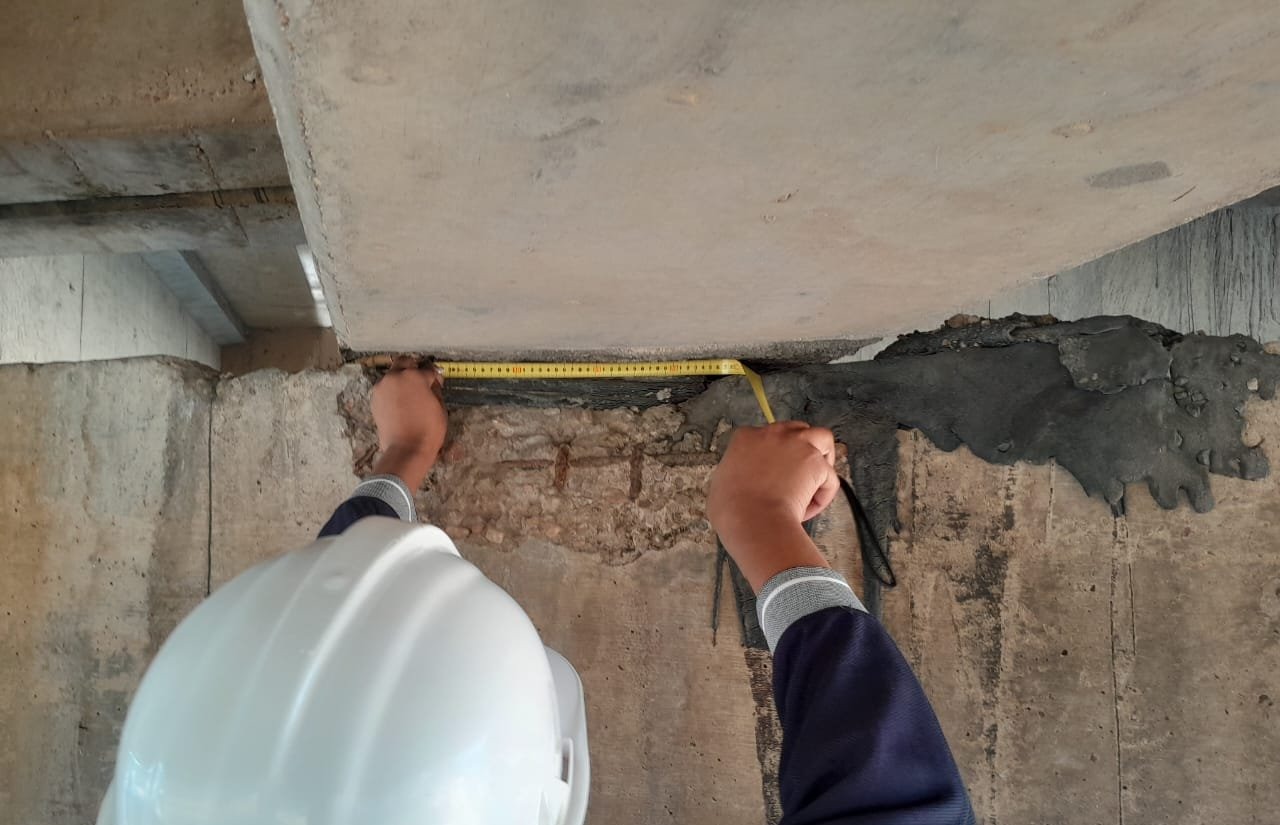
Selati: measuring the existing bearings at a beam end.
Reinstating the bearing supports and approaches
The repair works at the Selati River Bridge comprise several key interventions:
- Bearing shelf extensions: Damaged concrete is cut back to sound material, reinforcement dowels are installed, and the shelves are reinstated using high-strength concrete to provide wider, sound bearing seats.
- Jacking and bearing replacement: Once the shelf extensions are completed, the deck is jacked, the bearings are inspected and replaced, and new elastomeric bearings are installed on epoxy mortar plinths.
- Full-depth approach reconstruction: The scoured approaches are rebuilt in layers, comprising selected subgrade, a chemically stabilised subbase, a G1 crushed-stone base and asphalt surfacing.
- Approach slabs: Reinforced concrete slabs are provided at both ends to span the fill behind each abutment, limiting the formation of a step where the approach fill may settle or scour.
- Joints and protection works: Bridge joints are replaced, embankment protection is reinstated at the abutments, and a new guardrail on steel posts anchored to the deck is installed in front of the existing handrail.
The works are undertaken under live traffic, with construction carried out in half-widths to keep the R40 open throughout the repair process.
Inspecting from above: the Under Bridge Inspection Unit
Some of the most critical damage to a bridge is not visible from the deck above.
Bearings, beam ends, bearing shelves and the underside of the deck require close-up inspection to establish the extent of deterioration and determine the appropriate repair measures.
The Under Bridge Inspection Unit (UBIU) provides a practical means of accessing these areas. The truck-mounted hydraulic boom deploys an inspection platform beneath the bridge deck, allowing engineers to examine structural elements that would otherwise be difficult to reach.
At the Selati River Bridge, this access enabled inspection of the spalled bearing shelves, exposed reinforcement and existing bearings. More generally, the unit can support detailed condition assessments while reducing the need for conventional access structures founded within the river channel.
Reliable inspection information is essential to developing appropriate repair solutions, particularly where structural supports have been damaged by severe flooding.
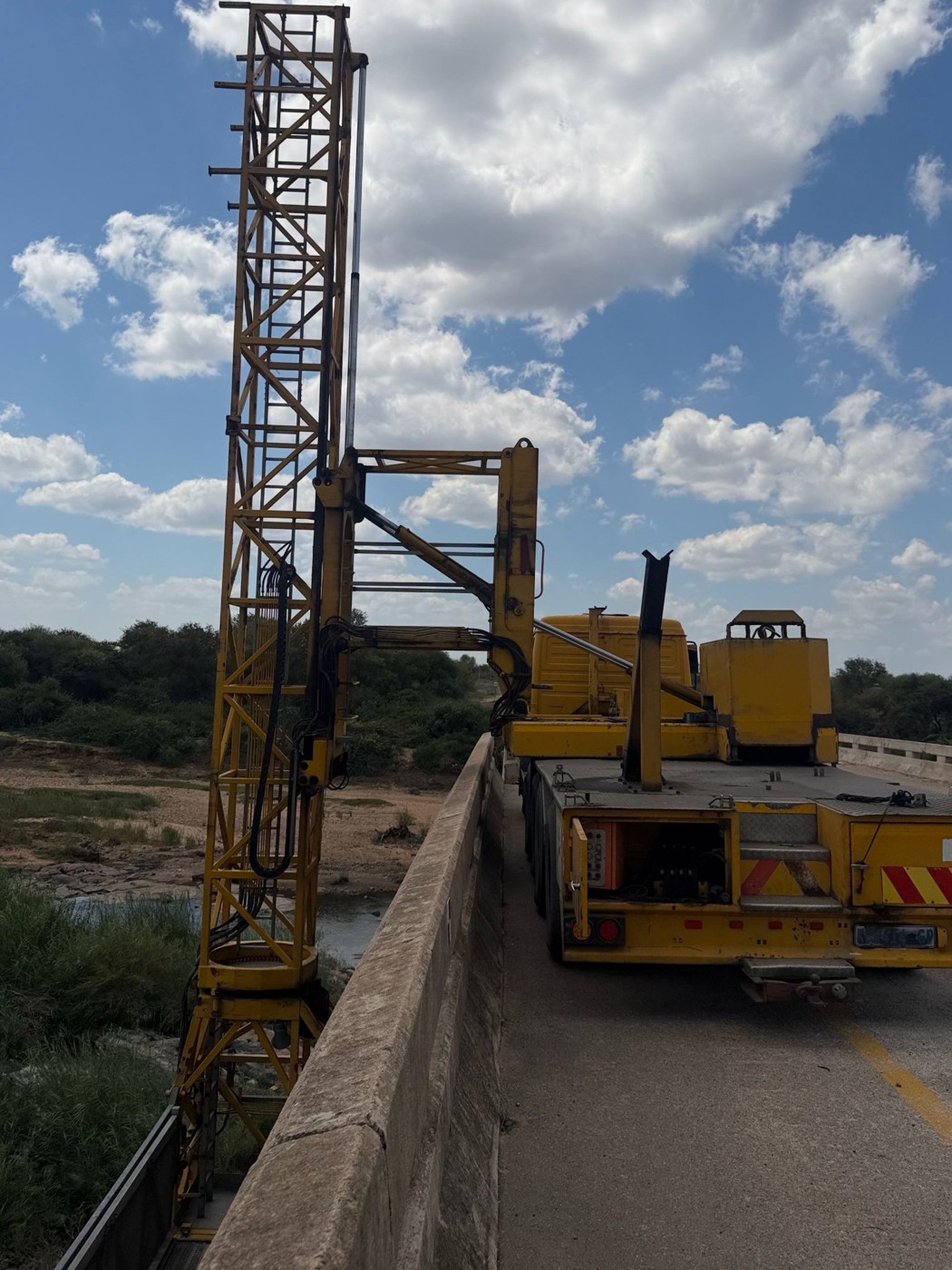
Letaba: the UBIU access tower lowered over the parapet.
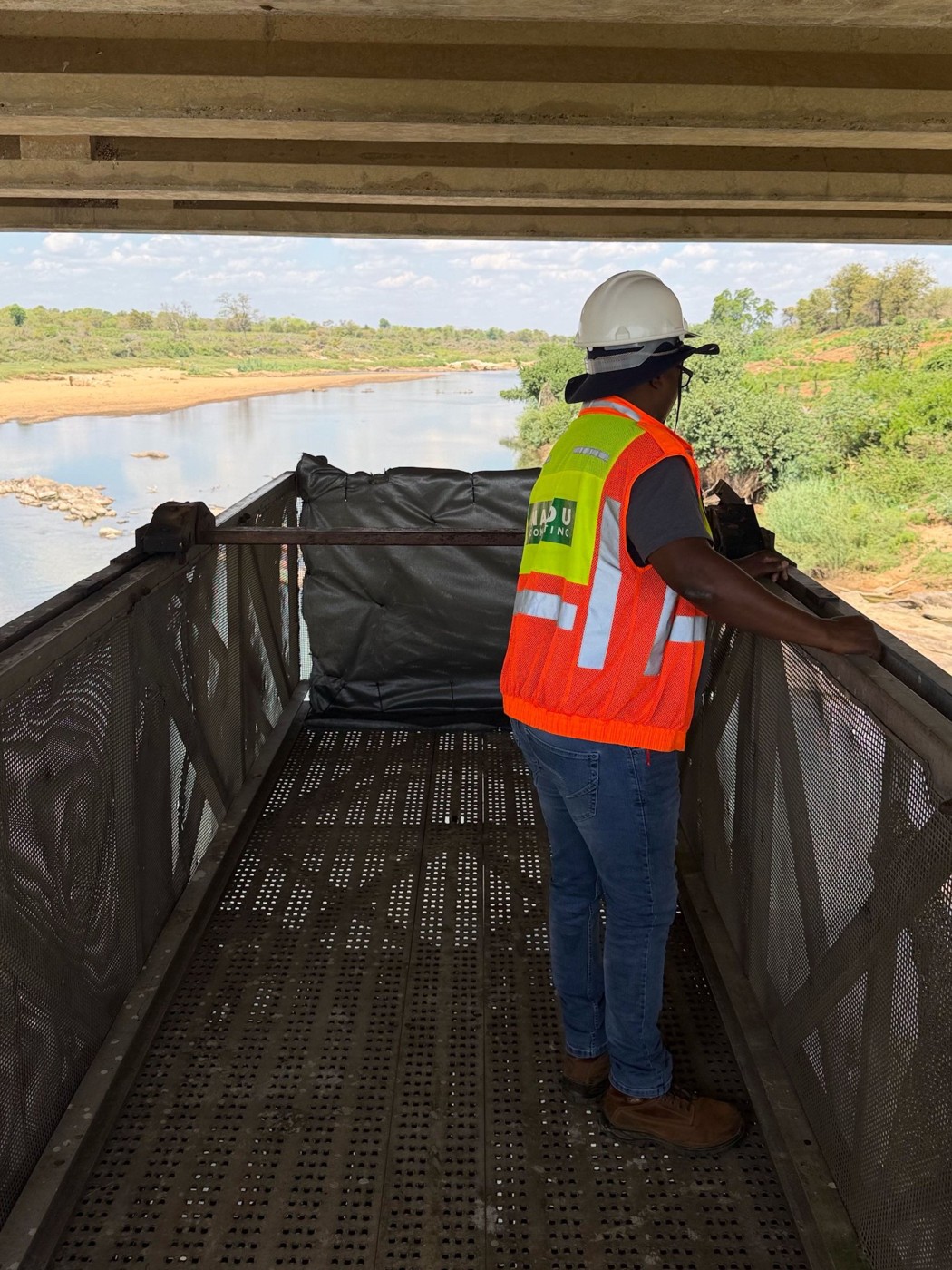
Letaba: inspecting the beams and deck soffit from the UBIU platform.
Building Back Stronger
The January 2026 floods highlighted important considerations for bridge resilience. At the Letaba River Bridge, the damage showed how significant lateral flood forces can displace a deck that relies largely on bearing friction for its lateral restraint. At the Selati River Bridge, the damage highlighted the importance of sound bearing seats and protected approach embankments.
The repair works address these issues through structural realignment, bearing replacement, improved restraint, concrete rehabilitation, embankment protection and reconstruction of the affected road approaches.
Working alongside SANRAL and the appointed Contractor, Naidu Consulting is contributing to the restoration of these critical transport links serving the communities, freight operators and the tourism economy of the Ba-Phalaborwa region.

A joint site inspection on the deck with SANRAL and the project team.


