How Naidu Consulting Embeds ESGS for Resilient South African Infrastructure
Exploring how Naidu Consulting makes ESGS practical in daily engineering, shaping resilient, future-ready infrastructure for South African communities.
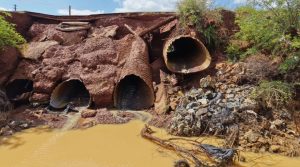
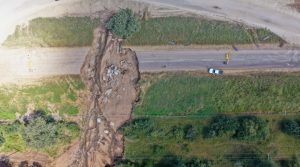
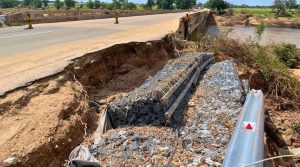
The road collapsed before the storm had even passed.
A bridge, once dependable became a fault line.
Entire communities were isolated, not because engineers lacked the ability to build, but because the forces of nature demanded more than anyone had designed for.
This is the reality South Africa now faces. Climate extremes are no longer rare, they are recurring. Infrastructure failures are no longer isolated, they are indicators. Public expectations are no longer passive; they are urgent, informed, and uncompromising. The question is no longer whether infrastructure will be tested, but whether it was ever designed for that test in the first place.
In this context, engineering cannot afford to be reactive. It must anticipate disruption. Achieving this requires more than stronger materials or improved models, it calls for a shift in responsibility. Environmental, social, governance, and sustainability (ESGS) principles must be embedded into every decision.
Sustainable Infrastructure Development is not a compliance exercise. It is the basis for systems that can endure uncertainty, safeguard communities, and maintain trust. Because when infrastructure fails, the consequences extend far beyond physical damage; they disrupt livelihoods, access, safety, and social stability.
Designing with ESGS at the core means asking better questions: Who is affected? What are the long-term impacts? How can systems adapt rather than fail?
This thinking underpins Naidu Consulting’s approach, where resilience, efficiency, and social value are treated as interconnected outcomes rather than competing priorities.
From Principle to Practice
At Naidu Consulting, ESGS is not theoretical, it is embedded across the full project lifecycle.
It starts at project scoping, where decisions are shaped not only by technical requirements, but also by environmental sensitivity, community impact, and long-term performance. Early-stage thinking is increasingly informed by insights such as those explored in Climate Change within the Civil Engineering Space in South Africa, from the Perspective of Naidu Consulting, reinforcing the need to design for a changing and uncertain future.
During design, ESGS becomes measurable. On the pavement engineering periodic maintenance project on National Route 2, Section 30 (km 14.0 to km 47.0), carbon dioxide equivalent (CO₂e) emissions were quantified at detailed design stage. This established a baseline against which construction-phase emissions could be assessed, enabling active carbon management rather than retrospective reporting.
As highlighted in Understanding and Reducing the Carbon Footprint in Civil Engineering, reducing emissions is no longer optional. It is fundamental to responsible design and long-term sustainability.
Material choices further reinforce this approach. The use of bitumen rubber gap-graded and open-graded asphalt (BRAGG and BRAOG), implemented on National Route 3, Section 3 in Ashburton, demonstrates how performance and sustainability can align. This porous, stone skeletal wearing course resists fatigue cracking, reduces surface runoff, and lowers traffic noise. By incorporating recycled tyre rubber, it also diverts waste from landfill, embedding circular economy principles directly into infrastructure.
Importantly, the project has delivered measurable social value, creating over 293 local jobs, including opportunities for women and youth, highlighting how infrastructure can directly contribute to socio-economic upliftment.
Designing for Resilience
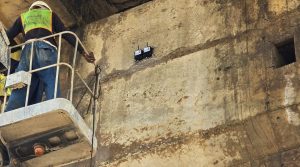
Resilience is further strengthened through forward-looking design. On the dualling of National Route 2, Section 1 (km 38.6 to km 45.4), which includes a 450 m cut-and-cover tunnel, a Structural Health Monitoring (SHM) system is being incorporated.
In an era of increasing climate uncertainty, early detection of structural risks is critical. The system enables continuous monitoring of:
- Concrete and rebar strain
- Deck temperature
- Rebar corrosion potential
- Material properties
- Weather and groundwater conditions
This shifts infrastructure management from reactive maintenance to proactive resilience, ensuring assets are not only built to last, but continuously understood throughout their lifecycle.
Extending ESGS Beyond Design
ESGS does not stop at design. Procurement ensures that contractors and suppliers are evaluated not only on cost and capability, but also on ethical practices and environmental responsibility.
On site, ESGS is reflected in daily decisions, from environmental compliance to worker welfare and community engagement.
Naidu Consulting’s multidisciplinary model strengthens this integration. Engineers, planners, environmental specialists, and project managers collaborate closely, ensuring that ESGS considerations are embedded rather than siloed.
Long-Term Value and Impact
Infrastructure designed with ESGS principles performs better over time. It is more resilient to climate stressors, requires fewer reactive interventions, and maintains functionality under changing conditions, protecting both investment and public value.
For partners and contractors, this creates alignment, transparency, and accountability across the value chain.
Equally important is the social impact. Through mentorship, skills transfer, and local empowerment, infrastructure becomes a platform for broader development. It is not simply built for communities, but with them.
Looking Ahead
ESGS and resilience must be embedded in daily engineering practice, not confined to policy. The challenges facing infrastructure are evolving, and so must the way it is conceived and delivered.
Early engagement is critical. By integrating ESGS principles from the outset, sustainability and resilience are designed into projects rather than added later.
As climate pressures intensify and expectations grow, the opportunity lies in acting now, designing infrastructure that is not only fit for today, but ready for what comes next.