Structural Engineering in 2026: How Naidu Consulting helps build safer, smarter communities
The evolving importance of structural engineering in 2026
Why structural engineering still sits at the heart of the built environment
Structural engineering is often an invisible profession. Most people do not think about it every day, yet it plays a decisive role in keeping buildings, bridges, and infrastructure. At its core, structural engineering ensures that structures can safely resist the loads and environmental actions they face throughout their design life. It is fundamental to public safety, economic continuity, and long-term infrastructure performance.
Safety and resilience under new pressures
Global guidance such as the Climate Resilient Infrastructure Handbook reinforces the need for infrastructure that can perform under more frequent and severe climate stresses.

Sustainability and carbon-conscious structural design
Sustainability has become one of the defining drivers of structural design. Structural decisions directly affect embodied carbon through material quantities, span arrangements, construction methodology, and the extent to which existing infrastructure can be retained. This is already evident in the structures on the N2 Winelands project, where structural design is being approached with carbon reduction in mind. By evaluating lower carbon impact structural options, projects can reduce concrete and steel demand without compromising safety or serviceability.
Industry initiatives such as SE 2050 structural engineers’ commitment to reducing embodied carbon highlight how structural engineers are expected to lead on low-carbon design choices. Naidu’s innovation work on photo-luminescent “glow in the dark” concrete polymers shows how materials research can improve safety and visibility for communities after dark.
Key implications of modern structural engineering in 2026
What structural engineering in 2026 means for clients and asset owners
What structural engineering in 2026 means for project delivery teams
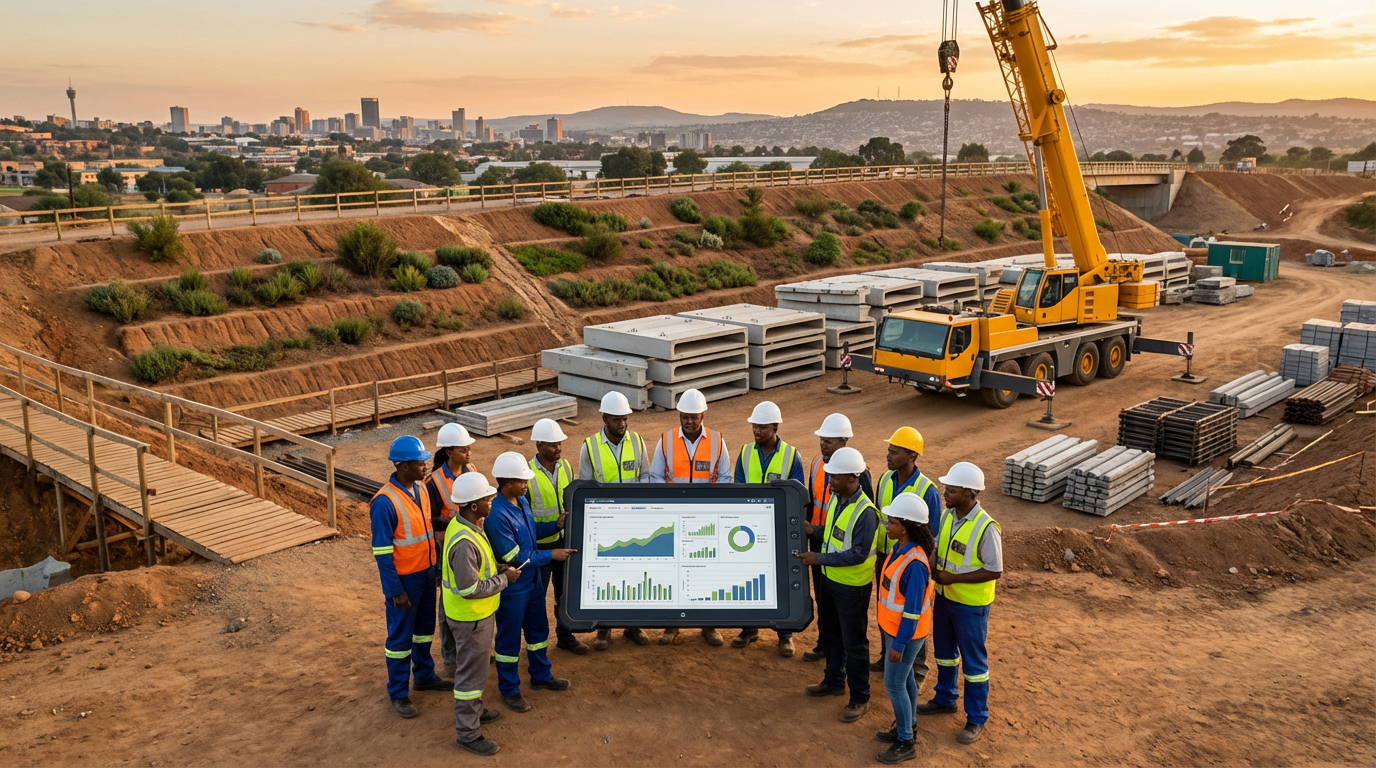
For project teams, structural engineering is increasingly collaborative and digitally enabled. Civil engineers, architects, structural engineers, and contractors must work together more closely than ever before, especially on multidisciplinary infrastructure schemes.
How structural engineering decisions affect communities in 2026
Everyday safety and quality of life
Safe bridges, buildings, and public infrastructure form the physical basis of everyday life. When infrastructure performs well, communities often do not notice it. That reliability is itself evidence of good engineering. By protecting public safety and maintaining continuity of service, structural engineering supports mobility, economic activity, and access to essential services.
Shaping how people move, work, and live
Structural systems also shape the way cities and regions develop. Efficient bridge structures, transport facilities, public buildings rely on sound structural solutions. Structural decisions made early in design influence how spaces function and how well they serve the people who use them.
Equity, access, and long-term community value
Structural engineering also has a social dimension. Infrastructure should not only be safe at handover; it should remain safe and functional for decades. Good structural design therefore contributes to equity and access by ensuring that communities, including vulnerable and underserved ones, have dependable infrastructure over the long term.
Why structural engineering is central to Naidu Consulting in 2026
Structural engineering is a core part of Naidu Consulting’s value proposition. It underpins the firm’s ability to deliver infrastructure that is safe, durable, and aligned with wider project objectives. In practice, this means going beyond basic code compliance to provide solutions that respond to technical, environmental, operational, and community requirements at the same time.
This is underpinned by the ultimate team at Naidu Consulting, who bring structural, civil and digital skills together.
Naidu Consulting’s structural engineering approach in 2026
Leveraging digital design tools, BIM, and data delivery
Naidu Consulting continues to strengthen its digital engineering capability through the use of Building Information Modelling, coordinated digital workflows, and structured information delivery. BIM is no longer only a visual coordination tool, but it has become a practical way of integrating information in a common environment so that teams can work with greater consistency and fewer disconnects.
Naidu Consulting is also moving into the automation space. Repetitive engineering tasks, model generation, checking routines, and option studies can increasingly be supported by scripting and parametric tools. This does not replace engineering judgement but instead it allows engineers to focus more on design quality, optimisation, risk, and performance.

Data, monitoring, and lifecycle thinking in structural engineering
A strong example of lifecycle-focused structural engineering can be seen in the rehabilitation of the uMzimkhulu River Bridge. The bridge, located on Regional Route 102 between Hibberdene and Port Shepstone, is a 1950s reinforced concrete structure with fifteen 25 m spans, giving a total length of about 375 m. During investigation, one of the piers was found to have experienced significant movement, with the top of the pier displaced by approximately 500 mm relative to the deck. The rehabilitation strategy went beyond conventional repair. It incorporated bridge instrumentation as part of a broader risk management and serviceability approach.
Collaborative, community-aware design